
GeoTec Insitu is proud to be able to offer our clients state-of-the-art multiparameter in-situ soil testing methods. Among the most advanced tests currently used in geotechnical engineering are those belonging to the family of flat dilatometers, namely Marchetti dilatometers.
This group includes the Seismic Dilatometer and the Medusa Dilatometer, which are used for advanced soil characterization. In addition to the standard DMT intermediate readings (I D , K D , E D and U D ) and geotechnical parameters, the Seismic Dilatometer measures shear wave (V s ) and compression wave (V p ) velocities in the soil.
Based on the measured wave velocities, the small strain stiffness moduli (G₀ and/or E₀) can be determined. These form the basis for defining G–γ and/or E–ε relationships used in advanced constitutive models. Furthermore, V s measurements make it possible to assess whether the soil exhibits a significant microstructure, which can significantly influence its mechanical behaviour.
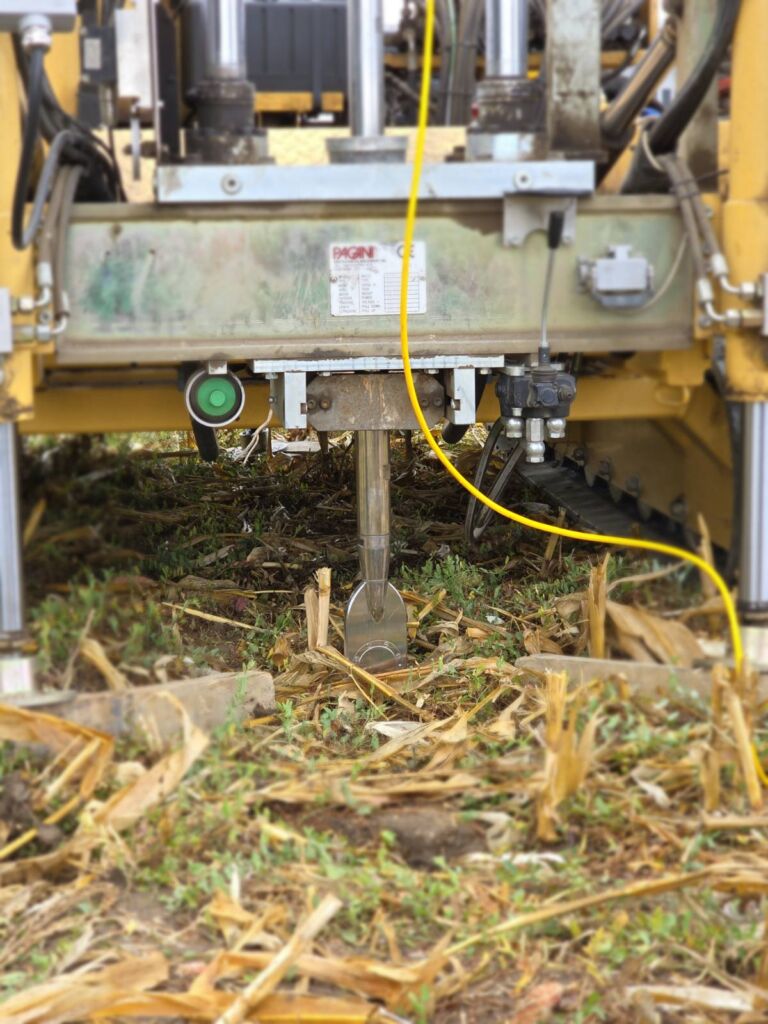
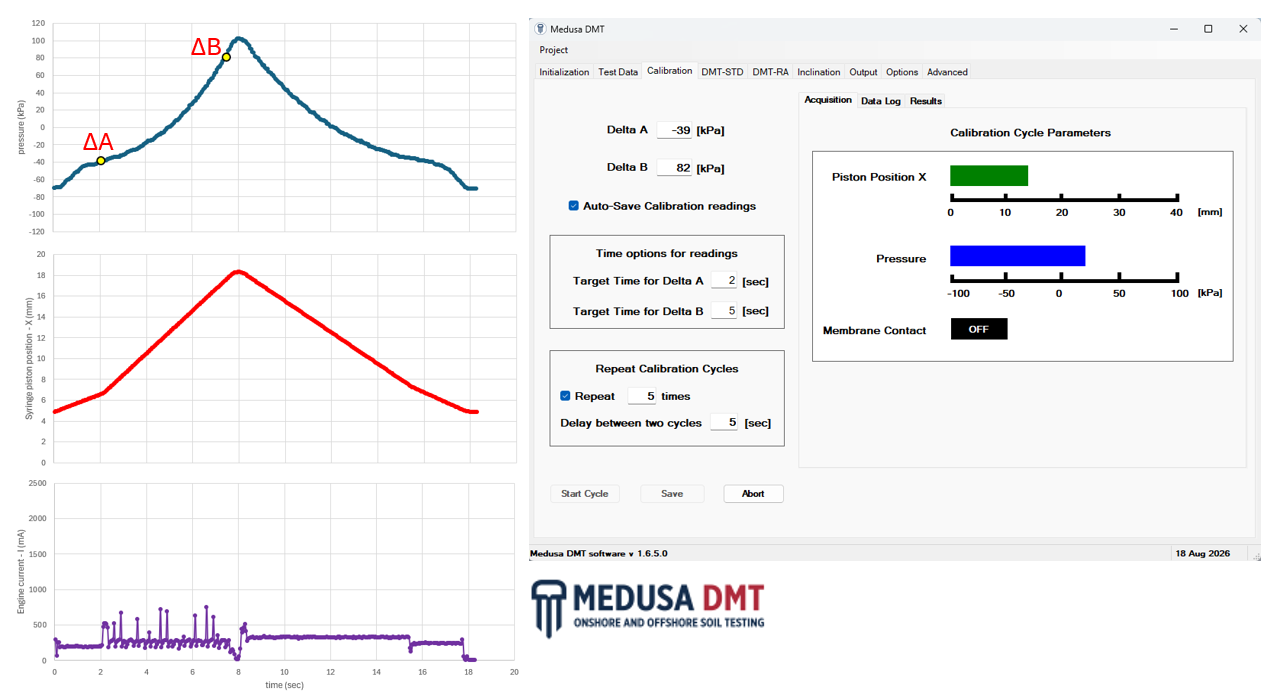
The Medusa DMT, the latest development in this field, is a fully autonomous device that can perform soil testing not only manually but also in automatic operating mode, thereby eliminating the risk of human error during measurements. The Medusa DMT enables soil parameter evaluation in conditions where partial consolidation effects occur during testing.
Particularly important Medusa DMT testing capabilities include:
- Measurement of total horizontal stress (σ h ) during blade insertion into the soil;
- Continuous monitoring of pore-pressure changes (A-reading) as a function of time, allowing the determination of the soil parameters k h and c h required for consolidation analysis;
- Repeated A and B pressure measurement cycles, allowing the pressure–membrane displacement hysteresis to be obtained.
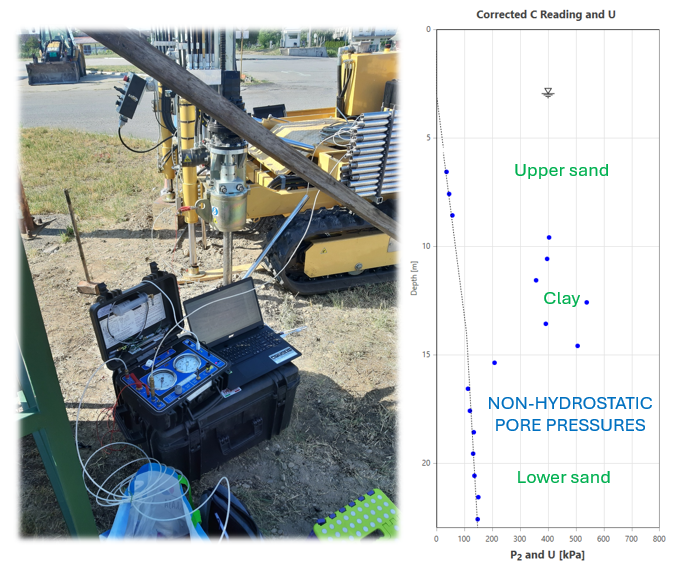
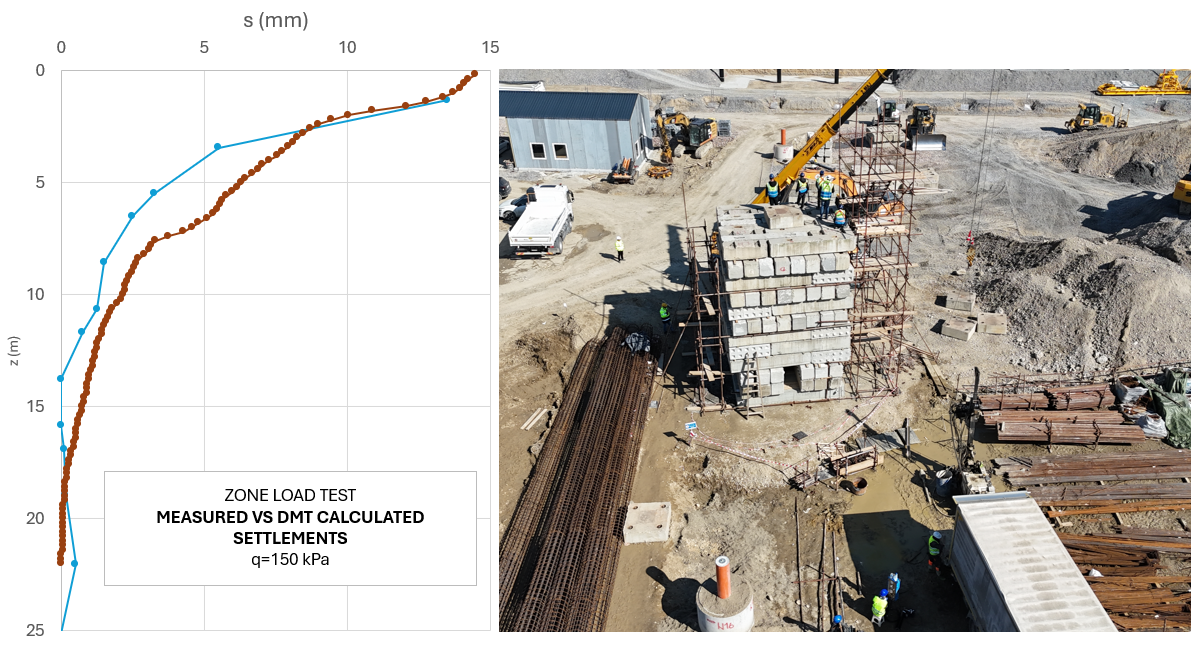
Some of the main applications of DMT/SDMT/MDMT include:
a) Advanced soil characterization and soil classification;
b) Determination of geotechnical soil parameters;
c) Settlement analysis of shallow foundations and embankments;
d) Assessment of soil liquefaction (using DMT and Vs methods);
e) Analysis of laterally loaded piles (determination of the so-called p–y curves);
f) Determination of G–γ relationships;
g) Compaction control of subgrade and engineered fills;
h) Identification of slip-surface locations in overconsolidated clays;
i) Determination of the coefficient of horizontal subgrade reaction, and others.
In special situations, the dilatometer can also be used for seabed soil investigation from river or marine bottoms, using specially designed penetration systems.
For more information, please visit https://www.marchetti-dmt.it/.